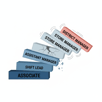
Why is turnover so high in your stores? Why are your managers exhausted by closing time? And how do you get the same selling behavior in location 1 and location 200? Your team is your customer experience. In a punishing labor market, the retailers who win are the ones who build a bench, turn managers into coaches, and maintain clear standards and accountability across every store.
Most staffing headaches trace back to two habits: managers who try to do everything and burn out, and owners who tolerate people who do not care. This guide covers how to hire for a real bench, develop managers who coach instead of police, prevent burnout, and keep the experience consistent as you scale.
Apply the same selling standard to every store.SalesRX trains associates and managers on one process, reinforced daily, so behavior is consistent across locations.
See how SalesRX works.
In this guide
- What is retail staff management?
- How do you build retail bench strength in a shallow labor market?
- What is the manager-as-coach model?
- How do you prevent retail manager burnout?
- How do you hold retail staff accountable?
- How do you keep the experience consistent across stores?
- How do you keep good retail employees?
What is retail staff management?
Retail staff management is how you hire, develop, hold accountable, and keep the people who deliver your customer experience. It is not scheduling and payroll. It is building a team that sells the same way in every store, led by managers who coach behavior rather than chase tasks. Done well, it lowers turnover, lifts conversion, and makes the business run without you in every building.
How do you build retail bench strength in a shallow labor market?
Remember when you had a bench you could draw from? In a tight labor market, that bench does not build itself. You build it on purpose: you hire ahead of need, you reward the people who are ready to step up, and you make advancement visible. A real bench is what lets you open, cover, and promote without scrambling, and it makes every operation smoother because you are never one resignation away from a hole.
Start with an honest question about each person: are they trainable? Training assumes a willingness to be held to a standard, including the standard that underperformance has consequences. If someone will not change no matter the coaching, no bench plan fixes that hire.
What is the manager-as-coach model?
Knowing does not change behavior. Coaching does. If it did not, every kid who learned the rules of the game would be a pro. Your managers are the difference between training that sticks and training that evaporates, and in most chains, they serve as compliance officers rather than coaches.
A compliance officer chases tasks: is the floor set, is the truck unloaded, is the schedule filled? Those matter, but tasks do not lift conversion; people do. When you shift managers from managing tasks to coaching the people who do the tasks, your KPIs move because coaching is what turns a lesson into a habit. A coach watches an associate work, catches the moment the sale slipped, and corrects it in real time, then again tomorrow.
A great manager also sees what your reports cannot. When an item sells out, your sales report only counts the demand you had inventory to satisfy. It does not count the customers who showed up after their size, color, or style was gone. No system logs that lost sale, but a manager on the floor notices the empty peg and the shopper who walked out, and feeds it back to buying before it repeats. That is judgment you will never get from a spreadsheet, and it is one more reason the manager, not the monthly report, is your real early warning system.
How do you prevent retail manager burnout?
The short version: Your managers are exhausted because they are trying to do everything and failing. A manager who owns every task and coaches no one becomes the bottleneck, and the crew feels it, which is where high turnover starts.
The fix is to narrow what a manager owns. Give them a clear priority, developing their people, and take the rest off their plate or push it down to the bench you are building. A productive manager makes more money and makes better people. An exhausted one makes neither. If your leaders are falling down, look first at how much you have piled on them.
How do you hold retail staff accountable?
The short version: Tolerating someone who does not care because action feels harder is a choice for a bad experience, and it is not fair to the people who do care. Document the issue, say what changes if it continues, and follow through.
The franchisee who couldn't. I helped a coffee franchisee with an employee who was not working out. I told her to write the person up and warn that the next incident would result in a cut in hours. She hemmed and hawed for weeks, finally did it, and I expected the employee to be let go. Instead, at four that afternoon I got a call: the franchisee, crying, asking me to come over and fire the employee for her. That is not my job, and it is exactly the job a leader has to be willing to do. The day an owner finally acts is usually the day the store gets better.
How do you keep the experience consistent across stores?
A chain is selling one thing above all: the same experience in every location. That takes clear boundaries, set once and applied everywhere.
- An employee handbook sets what people can and cannot do. Without written boundaries, staff invent their own and you inherit whatever they assumed. A paper copy is pretty outdated because most retailers will hand it to a new hire and say read this, then sign this paper confirming you did. No one reads that - not even the managers.
- Name tags and a dress code tell a shopper who works there and that this store is run with standards. No one wants to see someone who looks like they just rolled out of bed in an un-ironed shirt waiting on them. Have standards.
- One selling process, trained and reinforced the same way in every store, so an associate hired last week greets and sells like your best veteran.
Mike Sheldrake's coffee house. One of my first clients had no handbook. In December an employee asked to take twelve pounds of coffee for her friends because she was sure that was the policy, since that is what someone told her when she started. That happens when the boundaries were never written down. Set them once, in writing, for every store.
And do not confuse a full schedule with enough people. Cut the staff who deliver service and service falls in proportion, which just sends shoppers online. One or two people cannot serve four or five customers at once.
How do you keep good retail employees?
Retention is cheaper than replacement, and it comes from a few honest moves. Ask your own team what benefit would actually matter to them rather than guessing, because you will not out-buffet the tech giants but you can offer what your people value. Give shifts a simple shared log so one crew can hand off to the next without dropping information. And teach associates never to sell from their own wallet: when a salesperson decides an item is too expensive for a shopper, they project their own budget onto a customer who may happily pay, and they kill a sale the customer was ready to make.
Frequently asked questions
Why are my retail managers burning out?
Because they are trying to do everything and failing. A manager who owns every task and coaches no one becomes the bottleneck, and the crew feels it. Narrow what a manager owns to developing their people, and push the rest down to a bench.
What is the manager-as-coach model in retail?
It means managers coach their people's behavior rather than only chasing tasks. Knowing does not change behavior; coaching does. When managers coach the selling process in real time, conversion and units per transaction rise.
How do you build retail bench strength in a tight labor market?
Hire ahead of need, reward the people ready to step up, and make advancement visible. A real bench lets you open, cover, and promote without scrambling, making every operation smoother.
How do you keep the customer experience consistent across many stores?
Set boundaries once and apply them everywhere: a written handbook, name tags and a dress code, and one selling process trained and reinforced the same way in every location so every associate sells like your best veteran.
What do you do with an employee who won't do what you ask?
Document the issue on paper not only to make them understand something like cronic tardiness will get them fired, it also protects you in an unemployment case. Make sure you say what needs to change and the consequences if it continues - then follow through. Tolerating someone who does not care invites a bad experience and is unfair to the people who do care.
Related reading