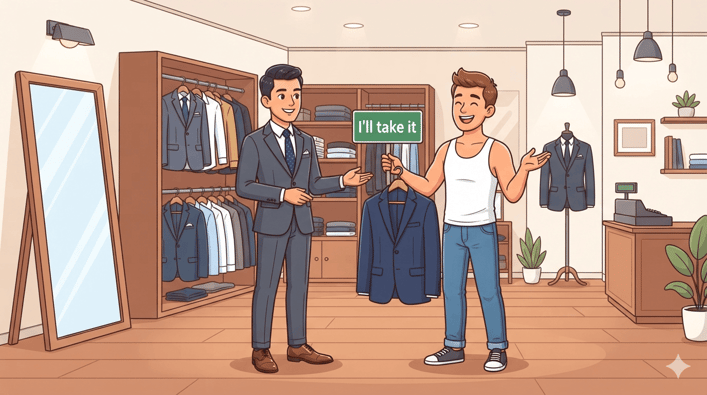


A customer is ready to buy when their hands are open, holiding the merchandise, their posture is relaxed, and they start asking ownership questions like "How do I care for this?" Read two kinds of signals, the body and the questions, and the timing answers itself.
Close too early and customers balk, feel processed, and never come back. Close too late and they walk out to "think about it." The signals keep you from both.
First, the body. A customer who is ready has their hands out and open. They're holding the merchandise you're talking about, turning it over, examining the seams. Their posture is relaxed.
A customer who isn't ready looks different: arms closed, not meeting your eyes, maybe looking at their feet or at the door. You don't need a psychology degree. You need to look up from the product long enough to see the person.
Second, the questions.
You're listening for questions that show the customer already sees themselves owning it. "How do I take care of this?" "Can I wash it?" "Now I need a new pillow.
"That would look good in the bedroom, wouldn't it?"
Nobody asks how to care for something they aren't planning to own. Those questions mean the customer is in wonder, working out how the item fits into their life. That's the moment answering their questions and moving to the closing makes sense, because you're not pushing them anywhere. You're confirming a decision they've already made in their head.
And once the main item is closed, that's your opening for the add-on, while the yes is still warm.
The discipline is simple:
-
No buying signs, keep building value.
-
Buying signs, stop selling and close.
Most lost sales aren't lost to price. They're lost to salespeople who weren't watching.