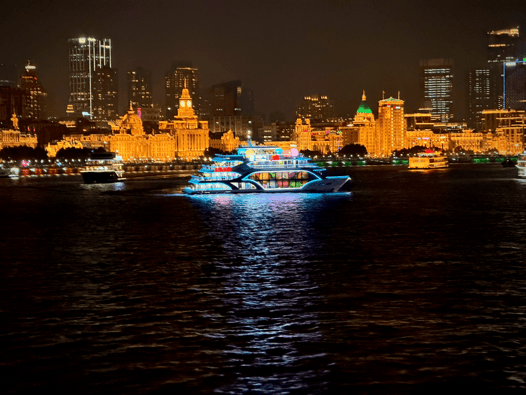


When you arrive at Shanghai Pudong Airport, there's a massive scale model of the city. Above it are three words:
Openness. Innovation. Inclusion.
I wasn't expecting that.
I came with assumptions from the past. Machine guns, loudspeakers, people being told what to believe. That picture collapsed within minutes as I entered a luxurious EV to be transported to my hotel.
The next morning, one of the first questions I was asked: "Do you feel safe walking around in your cities?"
"Yes, of course" I said. "We do. Why do you ask?"
"All we know of America is what your president says on TV about America." Ugh - that's not reality.
That question stayed with me as I moved through Shanghai, from EV-filled streets and immaculate parks to some of the most visually striking retail environments I've ever seen. What emerged wasn't a story about politics. It was a story about progress, discipline, and how culture shapes commerce.
Yes, this is an authoritarian country. That reality doesn’t disappear. But what struck me immediately was how consistently everything pointed toward improvement. Forward motion. Doing better.
That theme repeats everywhere.
Why Shanghai Streets Are Quieter Than American Cities
The drive from the airport was my first real shock.
The streets are filled with electric vehicles. Dozens of brands you’ve never heard of. The fit and finish are impressive, often rivaling luxury cars. And the city is quiet.
No engine noise. No helicopters overhead.
My driver explained how Chevrolet and Ford once did well in China but couldn’t compete with better-fitted, cheaper vehicles produced locally. After riding in several of these EVs, I understand why U.S. manufacturers are nervous about them eventually coming to America.
This isn’t hype. It’s execution.
Another reason the city feels so calm: you can’t honk in Shanghai.
It’s part of a “be more civil” campaign. If you’re caught honking, you could spend a week in jail and lose income. In a city of 24 million people, the rule sticks.
Authoritarian? Yes.
Effective? Also yes.
What Shanghai Public Spaces Don't Have: Digital Screens
One thing I didn’t fully register until I was already there for a few days was what wasn’t present.
Screens.
Walking through restaurants, public spaces, and outdoor events, there were no digital news channels piping anything at anyone. No constant headlines. No scrolling outrage. No background noise telling you what to think or worry about.
The closest thing I saw were one or two small screens along the beautiful Riverside Park. Instead of news, they used simple anime-style characters reminding people to throw away trash and be kind.
That was it.
No urgency. No fear. No noise.
It reinforced something I felt everywhere in Shanghai: intentional quiet. Not accidental silence, but a deliberate choice about what information belongs in public space.
That absence matters.
It explains why the city feels calmer, why people move differently, and why public spaces feel less agitated. When you remove constant stimulation, behavior changes.
Again, it comes back to the same idea repeated throughout my visit: what civilized behavior looks like, and how it’s reinforced not just by rules, but by restraint.
How Shanghai's Rivers Reveal China's Manufacturing Scale
From my room at the Riverside Pearl Hotel, I watched the Huangpu River day and night. A constant procession of short smaller boats carrying one or two shipping containers moved toward one of the largest ports in Asia, where they’d be loaded onto massive cargo ships.
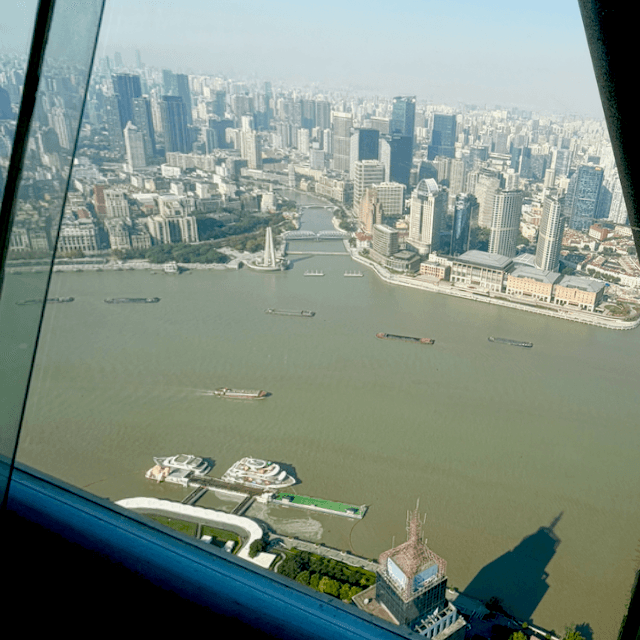
This is manufacturing in motion. Not abstract. Not theoretical. Constant.
It changes how you think about scale.
Shanghai Romance Park and the Art of National Storytelling
One night, my guide took me to Shanghai Romance Park, home of the Shanghai Romance Show.
It’s an hour-long production staged on a roughly 70-foot-wide set in a theater seating a couple thousand people. The scale rivals anything you’d see in Las Vegas. Cirque du Soleil-level dancers. Full waterfalls. Rain. Massive visuals.
But the story isn’t fantasy. It’s Shanghai itself.
From its beginnings as a fishing village to its rise as a modern global city, the show places Chinese heritage front and center. Yes, it’s propaganda. But it’s exceptionally well done propaganda.
It doesn’t feel heavy-handed. It feels proud.
You walk away understanding why people feel connected to the city and to its progress. You also see the secondary effect: young performers, artists, and creatives imagining themselves as part of that future.
The message is consistent: we can be better.
Speaking to 2,000 Chinese Retailers: What They Wanted to Learn
I wasn’t invited to China to talk about American retail trends.
Chinese retail has already mastered scale, speed, and execution. What leaders there are wrestling with now is what happens between the customer and the product.
My keynote was delivered to roughly 2,000 retailers from the country’s largest retail trade organization. There was no human translator. Instead, real-time AI transcription ran across the top of the screen, flawlessly.
What stood out immediately was how dense every other presentation was. Slides packed with text, images, and charts. Even without understanding the language, it felt overwhelming.
My opening slide was a leaky bucket.
I talked about how many sales should have been theirs that walked out the front door empty-handed and ended up with competitors. Not because of price. Not because of product. But because no one anchored the customer emotionally or guided them through the experience.
Several executives told me afterward that what stood out wasn’t just the message, but the clarity. One idea at a time. One visual. One problem clearly named.
"What impressed me most was Bob’s ability to connect global retail lessons with what Chinese retailers are facing right now. No jargon, no fluff — just real truths about customers, store teams, and what great retail execution actually looks like.
The audience loved him. You could feel the room leaning forward, laughing at the right moments, and genuinely reflecting on store operations in a new way.
For a first appearance in China, Bob set a new bar. If you ever get the chance to hear him speak, whether you’re a retailer, brand leader, or simply someone who cares about customer experience , don’t miss it. His ideas stay with you long after the session ends." - Matilda Hong
My main point was simple: 73% of retail sales in China still happen in stores, even though they've mastered payment processing, social selling, and digital tools better than almost anyone. But my experience walking their stores was quiet. Too quiet. They have traffic. They have beautiful spaces. What they don't have are shopping bags leaving with customers.
I told them they're playing the wrong game. They've built stores that look like websites. Clean. Efficient. Waiting for someone to hit the buy button. But discovery doesn't work that way. It has to be invitational. You have to show product, not assume people walked in ready to purchase.
I walked them through the three stages customers move through when shopping and what causes them to leave at each stage. I shared our worldwide client results showing that when retailers commit to training their teams on human connection, conversion goes up. Not because of luck. Because confidence converts.
The problem isn't the product. The problem is there's no one guiding the customer toward it.
In a culture accustomed to density and speed, simplicity became the differentiator.
That’s universal.
Surveillance, Safety, and Daily Order
Yes, there are cameras everywhere.
Parks are immaculately groomed. Streets feel safe. Scooters sit unlocked with keys in them. You always know someone is watching.
At one point, I crossed a street and noticed a drone overhead. A block later, I saw two young men in black crouched down, packing it away. SWAT was printed across their backs.
It’s not subtle.
But it’s controlled.
The Mattress Sign That Signals Chinese Culture
One of the most revealing moments came in a mattress store.
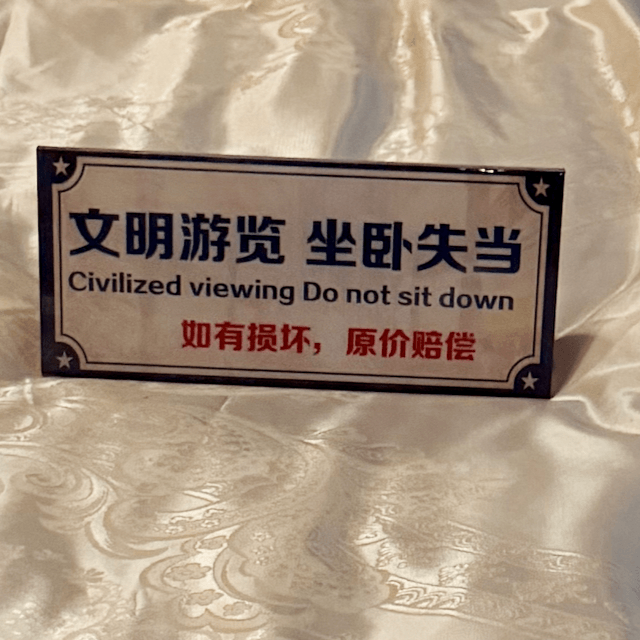
Civilized viewing. Do not sit down.
That wording matters.
It wasn’t framed as customer service. It wasn’t framed as a request. It was framed as behavior. As expectation.
Once you notice it, you see it everywhere.
In men’s restrooms, above urinals, another sign read to the effect of:
Civilized behavior: take one step closer.
Which translates plainly to: don’t pee on the floor.
I caught myself thinking we could use that in more American restrooms. We’d have cleaner bathrooms overnight.
What struck me wasn’t the rule itself. It was the assumption behind it. That people can be taught what “civilized” looks like and are expected to comply.
That mindset shows up in how quiet the city is, how clean the parks are, and how orderly the retail environments feel.
Why Shanghai's Beautiful Stores Feel Emotionally Distant
Shanghai retail is visually stunning. Architecturally bold. Immaculate.
Emotionally, it often feels distant.
In one local menswear brand, Younger, employees were stationed throughout the store but never spoke. One associate hovered two feet behind me. When I touched a jacket sleeve, a hand reached across my shoulder, pulled out the tag, and displayed the price.
Efficient.
Unsettling.
Another store used an “up system” that felt more like tracking than welcoming. Employees silently handed customers off as they moved.
Much like American retailers assume shoppers are ready to buy now.
That efficiency comes at a cost.
Arc'teryx and the Rise of Utility Fashion in China
One of the biggest surprises wasn’t just luxury logos. It was what people were choosing to signal.
I kept seeing upscale outdoor gear on both men and women, technical jackets, hiking outfits, high-quality materials. One logo I noticed over and over was a small dinosaur. I recognized it: Arc’teryx, a Canadian brand rooted in utility that has become aspirational.
Look at how they tell their brand history - in art.
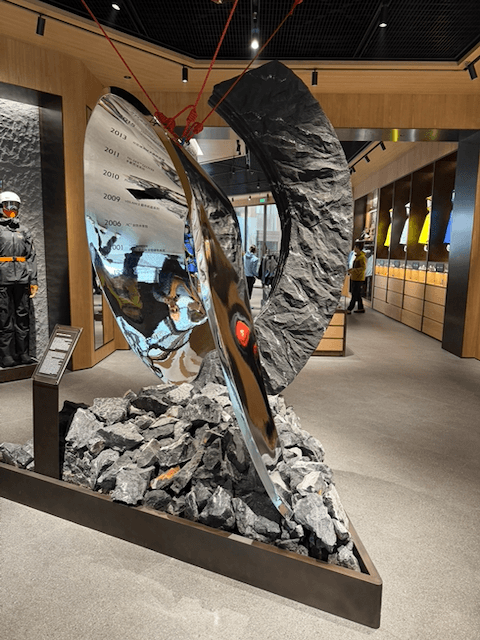
Getting outside has become a passion. Arc’teryx sits somewhere between Patagonia and luxury fashion. You can tell by the distance between items. Very clean lines. No wonder they are killing it with their $1000+ jackets and accessories.
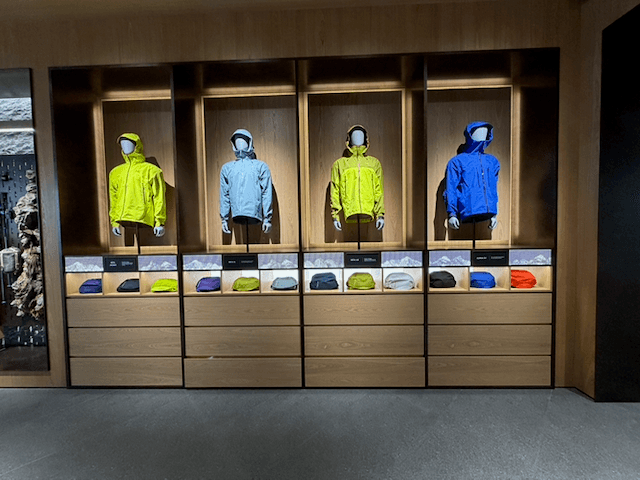
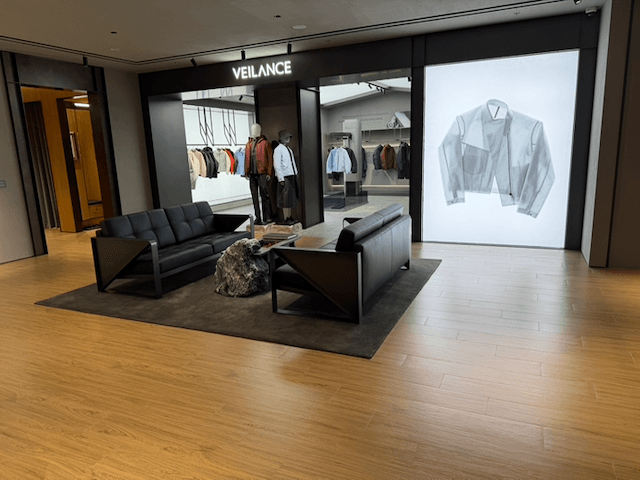
And unlike so many stores I walked into in Shanghai, their approach was different from the start. A young woman asked if this was my first time in their store. When I said yes, she invited me to look around both on the first floor and explore the staircase by the tree growing through the middle of the space.
It was invitational. Not the formulaic "welcome in" I've written about extensively, the one that's really code for 'I've done my job, now leave me alone.' She was opening a door, not checking a box.
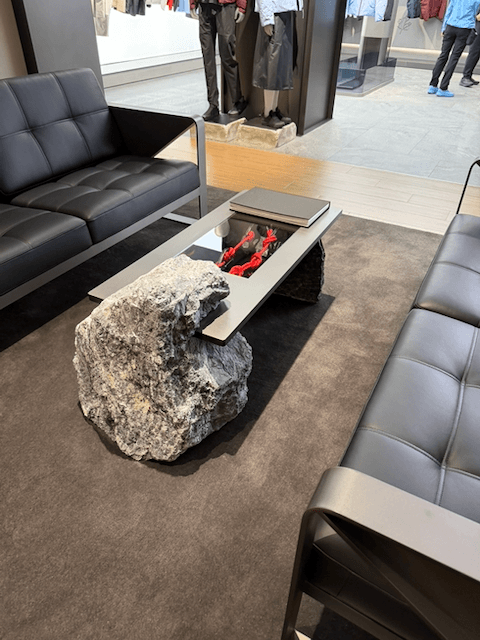
Utility became identity, and in Shanghai, that identity was everywhere.
The French Concession, Luxury, and Empty Hands
The French Concession is one of the most beautiful retail districts I’ve ever walked.
Tree-lined streets. Walkable. Calm. Elegant.
Flagship stores from Apple, Hermès, and Tiffany. Rolls-Royce and Bentley cruising by.
What I didn’t see were shopping bags.
Stores were busy. Restaurants were packed. But purchases weren’t visible. Again, beautiful spaces, minimal interaction, little emotional pull.
The Pattern Across Shanghai Retail: Beautiful Stores, No Connection
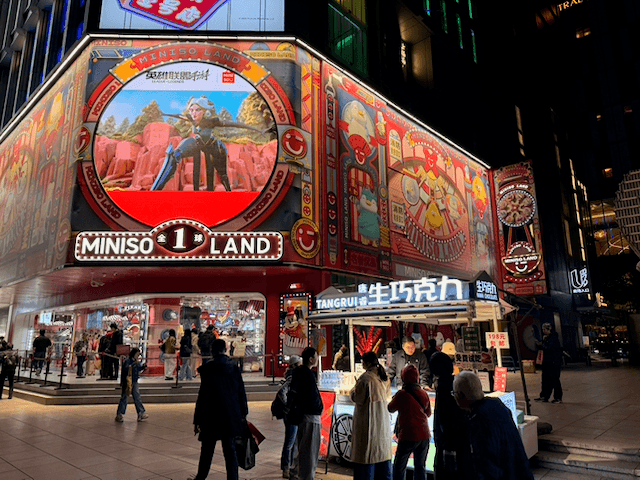
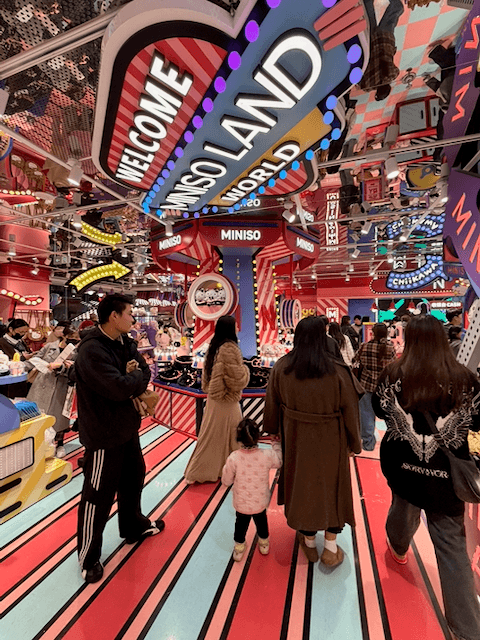
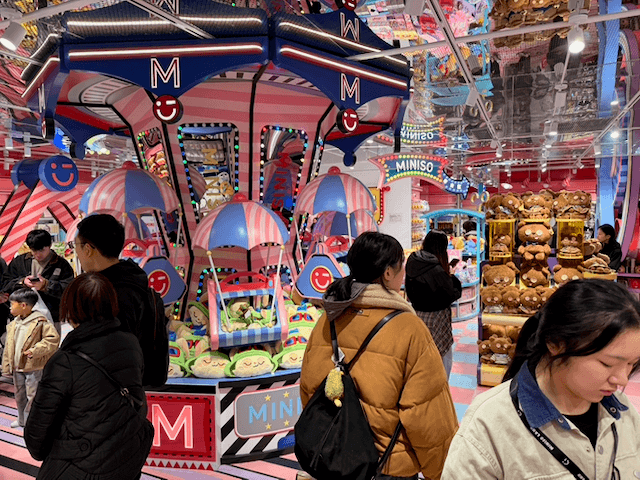
MINISO was overwhelming. Like standing in the middle of a pinball machine. Noises, lights, colors bouncing off every surface.
I clearly wasn't the demographic because the store was packed with teens and twenties. But at least it had energy. At least something was happening.
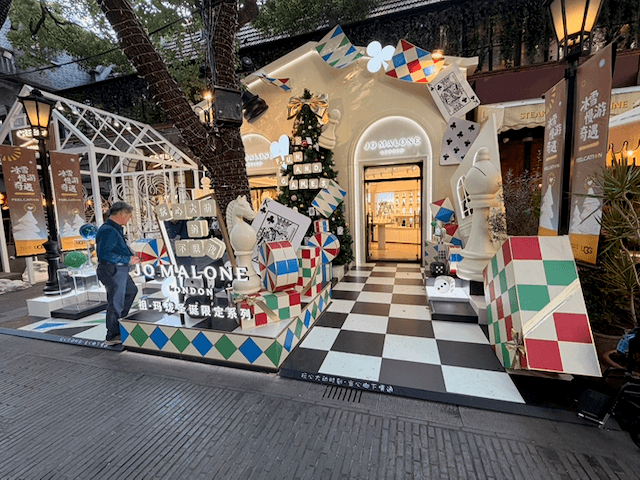
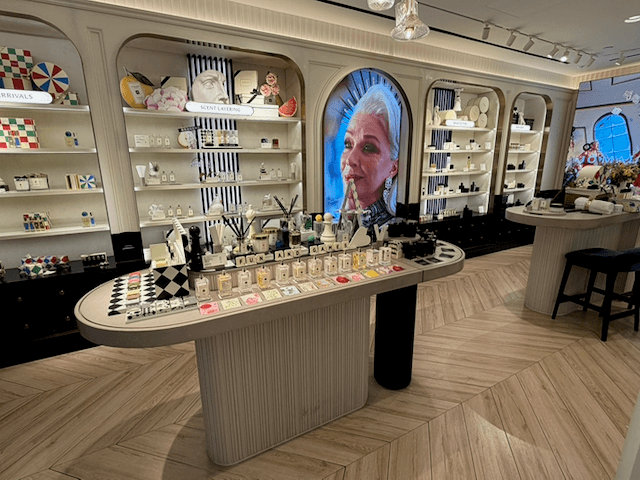
Jo Malone looked like it could have come straight out of New York City, but the service felt distant. A lot of waiting for people to ask rather than invitation to experience their scents.
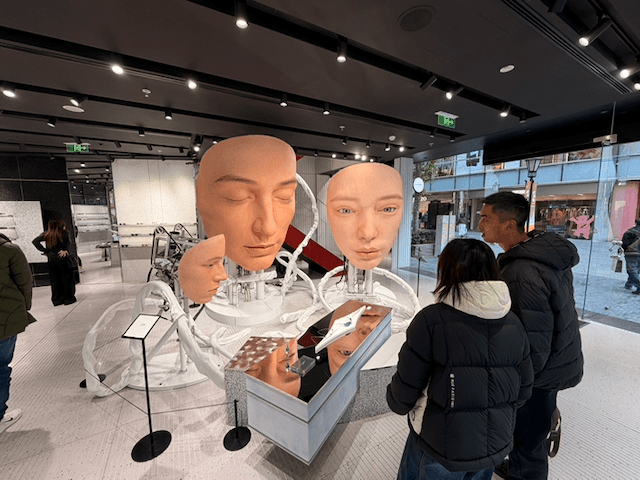
Gentle Monster with the three giant digital heads was stunning as a front window but cold, not like their Los Angeles flagship.
Swavarski's flagship was architecturally breathtaking and emotionally silent.
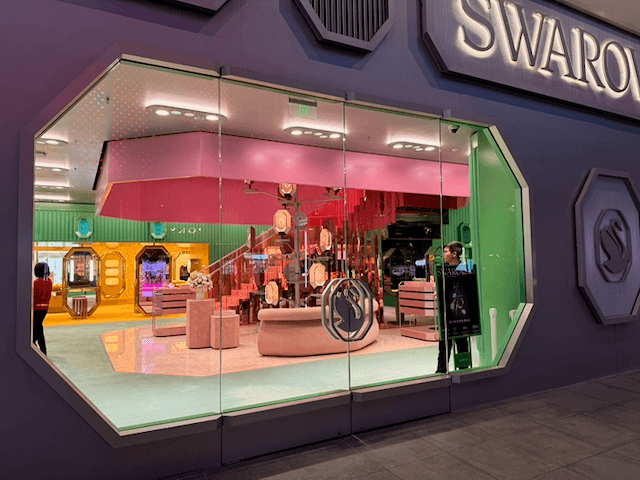
Beautiful stores. Silent employees.
I’ve seen this problem everywhere. Shanghai simply executes it at a higher design level.
One exception: Marvis, a Spanish toothpaste brand that built their entire store upside down.
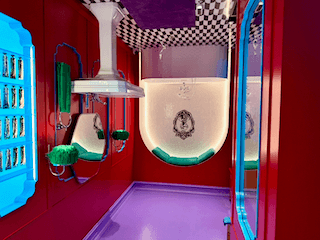
The bathroom fixtures hung from the ceiling. Mirrors, sinks, toilets, all inverted. It drew crowds. People stopped, looked, took photos.
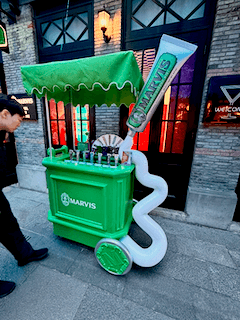
The problem came at the product wall. Twelve bell jars filled with herbs and flowers, each representing a flavor. You were supposed to smell them and imagine what the toothpaste would taste like.
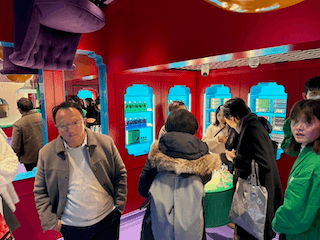
I couldn't.
I bought two tubes anyway. Orange mint and cinnamon mint. About $12 each. Both very strong. Not sure I'd do it again.
But I appreciated the attempt. They were trying to create an experience, not just sell toothpaste.
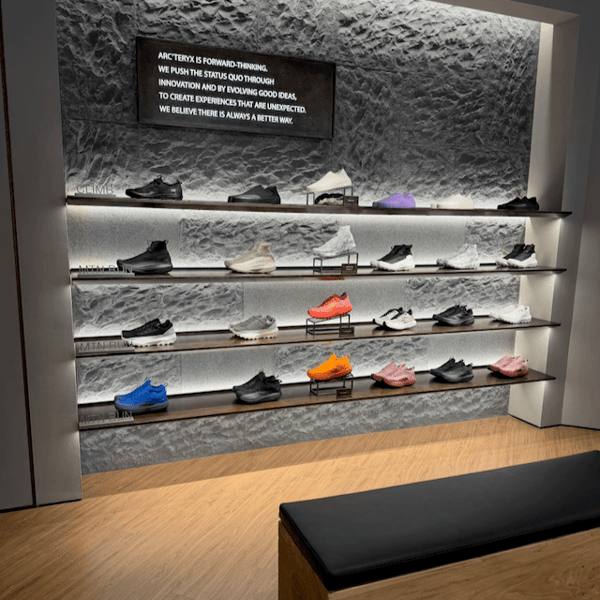
Arc’teryx had a sign that stopped me over their shoe wall:
“We push the status quo through innovation by evolving good ideas to create unexpected experiences. We believe there’s always a better way.”
That belief shows up everywhere.
Even one of the biggest EV brands says it plainly: BYD – Build Your Dreams.
That phrase doesn’t even translate from Chinese. It’s aspirational by design.
What American Retailers Can Learn From Shanghai
China isn’t what I expected. It isn't better or worse, it's simply different.
It’s ambitious, disciplined, modern, and deeply focused on being better tomorrow than today. That belief shows up in infrastructure, entertainment, manufacturing, and retail design.
Retail in Shanghai has mastered scale, precision, and execution.
What’s still emerging is emotional connection.
I've been thinking about that disconnect since I got home.
About how we're taught to see other people as threats before we see them as human. About how that programming shows up everywhere, from how we staff our stores to how we react when we feel afraid. Mass shootings at Brown College in New Hampshire. Bondi Beach in Australia. Others.
In my November newsletter, I wrote about how many of us grew up with a software of exclusion. That other people were bad, different, to be feared.
I grew up thinking China was the enemy. Movies portrayed them as villains. I arrived expecting to confirm what I'd been taught.
Instead, I found people focused on improving themselves and their future. I watched boats carry containers down the Huangpu River and thought about how often Americans dismiss products as "cheap Chinese stuff."
Except China is just the manufacturer. Where do the specs come from? America.
There's a case documented in reporting on Walmart's supplier pressure about Lakewood Engineering & Manufacturing Co. in Chicago, a box fan manufacturer. Built to last, metal construction. Walmart came to them and said if you want to be in our stores, you need to hit a certain price point. So they reengineered the product. Made it plastic. Cheapened it. Eventually moved production overseas.
The owner was heartbroken. But if he wanted to keep the account, he had no choice.
That had nothing to do with China. It had everything to do with the modern American consumer.
Travel forces you to confront what you thought you knew. It challenges assumptions you didn't realize you were carrying.
That's what Shanghai did for me.
I look forward to bringing my message of human connection in an increasingly disconnected world to London and São Paulo next year.